


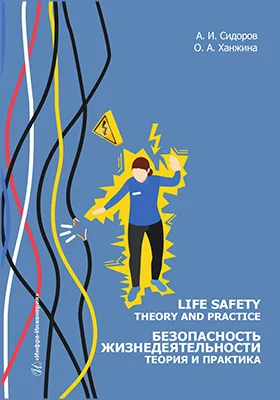
Безопасность жизнедеятельности
Учебное пособие предназначено для студентов, магистрантов, аспирантов, изучающих английский язык и для изучения безопасности жизнедеятельности как учебной дисциплины. В учебном пособии содержатся теоретические основы безопасности жизнедеятельности, рассматриваются условия, определяющие отсутствие вредности для организма человека, воздействие электрического тока на человека. Перечислены меры защиты от вредоносных и опасных факторов. Также книга содержит сборник заданий.Пособие может быть использовано для перевода технических и научных текстов в рамках дисциплины «Иностранный язык для профессионального общения».

Содержание
Содержание книги "Безопасность жизнедеятельности : теория и практика"
Отрывок из книги
14 the severity of this harm. Aggregate risk integrates several diverse concepts of risk (health, ecological, property damage). The procedure for determining the risk is very approximate. There are four me-thodical approaches to the definition of risk: 1) engineering, based on statistics, frequency calculation, probabilistic safety analysis, construction of trees of danger; 2) model, based on building models of the impact of harmful factors on an indi-vidual, social, professional groups, etc.; 3) expert, when the probability of various events is determined on the basis of a quiz of experienced specialists, i.e. experts; 4) sociological, based on a quiz of the population. The traditional safety technique is based on the categorical imperative: to ensure safety, to prevent any crash. As practice shows, such a concept is inadequate to the laws of the technosphere. The demand for absolute security, bribing with its humani-ty, can turn into a tragedy for people, because it is impossible to ensure zero risk in existing systems. The modern world rejected the concept of absolute security and came to the concept of acceptable (permissible) risk, the essence of which is the de-sire to achieve such a small danger that society will accept in this period of time. Acceptable risk combines technical, economic, social and political aspects and represents a certain compromise between the level of security and the possibilities for achieving it. First of all, it must be borne in mind that the economic opportunities for increasing the security of technical systems are not unlimited. Spending excessive funds on improving security can damage the social sphere, for example, worsen med-ical care. Fig. 1.4. Determination of acceptable risk (RA) Fig. 1.4 shows a simplified example of the definition of acceptable (permissible) risk: it can be seen that with increasing security costs, the technical risk of R is de-Socio-economic risk RSE Technical risk RɌ Security costs Risk of d...
Сидоров А. И. другие книги автора

С книгой "Безопасность жизнедеятельности" читают



























Внимание!
При обнаружении неточностей или ошибок в описании книги "Безопасность жизнедеятельности : теория и практика (автор Александр Сидоров, Ольга Ханжина)", просим Вас отправить сообщение на почту help@directmedia.ru. Благодарим!
и мы свяжемся с вами в течение 15 минут

за оставленную заявку