

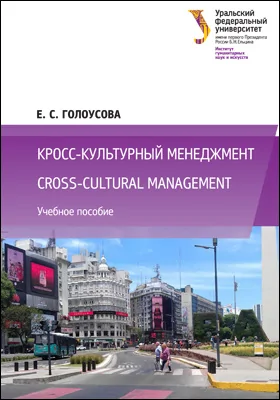

Кросс-культурный менеджмент
В учебном пособии освещаются вопросы управления отношениями, возникающими на границе национальных и организационных структур. Авторская интерпретация ключевых понятий и концептов курса и конкретные примеры помогут студентам анализировать все уровни культуры, преодолевать коммуникативные барьеры и эффективно общаться с носителями различных культурных традиций.Для студентов, изучающих международный менеджмент, международные отношения, а также для специалистов в сфере коммуникаций.

Содержание
Содержание книги "Кросс-культурный менеджмент "
Отрывок из книги
35role here is played by empathy and intuition. The main components of communicative competence are:— activity;— ability to accurately interpret messages and signals sent by the bearers of another culture;— degree of involvement in the process of communication;— ability to choose an appropriate topic for discussion, predict pos-sible reaction, etc.;— readiness to correct one’s communicative behavior.Cultural competence. The concept of cultural competence to a large degree coincides with the concept of cultural literacy. Among the fi rst scholars to introduce the concept of cultural literacy was Eric Donald Hirsch, an American educator and academic. While describing cultural literacy he was referring mainly to the ability to understand and partici-pate fl uently in a given culture. Cultural literacy is an analogy to literacy proper (the ability to read and write letters). A literate reader knows the object-language’s alphabet, grammar, and a suffi cient set of vo-cabulary; a culturally literate person knows a given culture’s signs and symbols, including its language, particular dialectic, stories, entertain-ment, idioms, idiosyncrasies, and so on. The culturally literate person is able to talk to and understand others of that culture with fl uency, while the culturally illiterate person fails to understand culturally-conditioned allusions, references to past events, idiomatic expressions, jokes, names, places, and so on. Personal comment Here is an example of the high level of cultural literacy (two people, one from Russia and another one form Argentina are talking on the phone and discussing the current events): — ¡Hola! Elida, how are you doing? (Hola — means “Hi” in Spa-nish).— Hi, Lisa, I am fi ne. What about you? — You know, there was a Russian Gala yesterday in Buenos Aires. — Oh, great. Did you enjoy it?— Oh, sure I did, I personally love Thaikovsky, Rakhmaninov and Glinka. This time the soloists of the Mariinsky Theater and Bolshoi





Внимание!
При обнаружении неточностей или ошибок в описании книги "Кросс-культурный менеджмент = Cross-cultural management (автор Елизавета Голоусова)", просим Вас отправить сообщение на почту help@directmedia.ru. Благодарим!
и мы свяжемся с вами в течение 15 минут

за оставленную заявку