

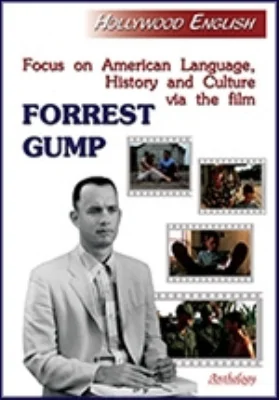

Focus on American Language, History and Culture via the film Forrest Gump
Настоящее пособие построено на материале фильма "FORREST GUMP", ставшего классикой американского кино. Первая часть содержит тексты для совершенствования навыков говорения и написания сочинений по теме "Кинематограф и кинокритика США", посвященные истории создания фильма, его проблематике, актерам, сыгравшим главные роли, различиям сценария и книги, на основе которой он был создан. Во второй части цитируются наиболее сложные для понимания отрывки аудиотекста и дается их грамматический, лексический и культурологический анализ. В третьей части рассматриваются исторические аллюзии фильма, приводится обширная информация об истории, политике и культуре США XX века для обогащения фоновых знаний студентов и обучения приемам ведения аргументативной дискуссии. В четвертой части содержатся упражнения, развивающие навыки аудирования и последовательного перевода. Пособие может быть использовано на занятиях по аудированию, кинопереводу, а также на курсах "Страноведение США" и "История англоязычных стран".

Содержание
Содержание книги "Focus on American Language, History and Culture via the film Forrest Gump "
Отрывок из книги
E. B. nuiyruHa Ext. Greenbow. Night. Mrs. Gump and Forrest walk along a sidewalk. A television inside a store window reveals Elvis Presley as he performs "Houng Dog" on a stage. F o r r e s t : (voice-over) ...was out s h o p p i n ' , and w e walked right by B e n s o n ' s Furniture and Appliance store, and guess what. The television reveals Elvis as he thrusts his hips and sings. E l v i s : (sings) "You ain't nothin' but a hound d o g . . . " Mrs. Gump and Forrest watch the television. Elvis dances around in the same manner Forrest did. A woman in the audience is screaming and applauding. E l v i s : (sings) "You ain't nothin' but a h o u n d d o g . . . " M r s . G u m p : This is not children's eyes. Mrs. Gump walks away, pulling Forrest with her. Forrest stops and takes one last look. Elvis continues to perform over the television. Elvis: (sings)"Well, you ain't never caught a rabbit and you ain't no friend of mine." F o r r e s t : (voice-over) S o m e years later, that h a n d s o m e y o u n g man w h o they called "The King," well, he sung too many songs, had himself a heart attack or s o m e t h i n g . 1. What new forms of music and visual arts began to become part of the popular culture in the 1950s? 2. What new music and art forms have e m e r g e d in the past 10 to 15 years? R e a d t o u n d e r s t a n d w h a t n e w m u s i c a n d a r t f o r m s d e v e l o p e d in t h e 1 9 5 0 s . The undercurrents of c h a n g e in society in 1950s w e r e reflected in music and art. During the 1930s and 1940s, popular music had been dominated by the smooth melodies of such "crooners" as Bing Crosby and Frank Sinatra and by the "big b a n d " sounds of Glenn Miller and Duke Ellington. In the 1950s, radio disk jokeys began playing a new type of music - r o c k ' n ' roll. Rock ' n ' roll 50























Внимание!
При обнаружении неточностей или ошибок в описании книги "Focus on American Language, History and Culture via the film Forrest Gump (автор Елена Пичугина)", просим Вас отправить сообщение на почту help@directmedia.ru. Благодарим!
и мы свяжемся с вами в течение 15 минут

за оставленную заявку