

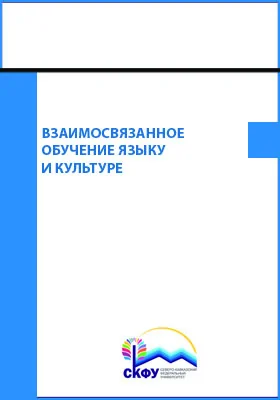

Взаимосвязанное обучение языку и культуре
Пособие оставлено в соответствии с требованиями ФГОС ВО и представляет собой сборник текстов европейских и американских ученых – методологов языкового образования и ориентировано как на аудиторную, так и на самостоятельную работу, а также знакомит студентов с последними зарубежными тенденциями в теории и практике обучения иностранным языкам.Предназначено для студентов, обучающихся по специальностям 45.04.02 – Лингвистика (магистерская программа «Взаимосвязанное обучение языку и культуре») и 44.04.01 – Педагогическое образование (магистерская программа «Обучение иностранному языку в диалоге культур»).

Содержание
Содержание книги "Взаимосвязанное обучение языку и культуре : сборник текстов на иностранном языке"
Отрывок из книги
32Zahorik includes operationalizing learning principles, following a tested model, and doing what effective teachers do, as examples of science-research conceptions.OPERATIONALIZING LEARNING PRINCIPLESThis approach involves developing teaching principles from research on memory, transfer, motivation, and other factors believed to be important in learning. Mastery learning and programmed learning are examples of science-research conceptions of teaching in general education. In TESOL, Audiolingualism, Task-Based Language Teaching, and Learner Training represent applications of learning research to language teaching.Audiolingualism was derived from research on learning associated with behavioral psychology. Laboratory studies had shown that learning could be successfully manipulated if three elements were identified: a stimulus, which serves to elicit behavior; a response, triggered by a stimulus; and reinforcement, which serves to mark the response as being appropriate (or inappropriate) and encourages the repetition (or suppression) of the response in the future. Translated into a teaching method this led to the Audiolingual Method, in which language learning was seen as a process of habit formation and in which target-language patterns were presented for memorization and learning through dialogs and drills.A more recent example of attempts to develop a teaching methodology from learning research is referred to as Task-Based Language Teaching. Proponents of Task-Based Language Teaching point out that second language acquisition research shows that successful language learning involves learners in negotiation of meaning. In the process of negotiating with a speaker of the target language, the learner receives the kind of input needed to facilitate learning. It is proposed that classroom tasks which involve negotiation of meaning should form the basis of the language teaching curriculum, and that tasks can be used to facilitate practice of both of language forms and...

















Внимание!
При обнаружении неточностей или ошибок в описании книги "Взаимосвязанное обучение языку и культуре : сборник текстов на иностранном языке (автор )", просим Вас отправить сообщение на почту help@directmedia.ru. Благодарим!
и мы свяжемся с вами в течение 15 минут

за оставленную заявку